
The Problem With Somalis Goes Back to Somalia Part I
A look at the conditions that Somalis came from and directly lead to the situation in Minnesota.

Welcome to the first post of A Normal Midwestern Guy of 2026! I’m glad 2025 is over and looking forward to seeing what 2026 will bring. For the last post of 2025, I dropped a look at four interesting people throughout history. Click below if you missed it or just want to revisit those amazing people.

Today I’m going to look at what is going on in Minnesota. The amount of fraud and misuse of fund happening there is beyond belief, actually it’s really not, if we look at how the “government” of Somalia operated and continues to operate, we shouldn’t have been shocked that once they moved to America, it was business as usual. Today I’m covering the history of Somalia from 1890 until 2025 and corruption in Somalia itself. Next time I’ll look at how it translates to Minnesota. For those of you that are new, or haven’t checked out my archive of old articles, I, unlike most people talking about this issue, have actually been to Somalia. While I was in the Marines, I was in Somalia from December 10, 1992 until April 12, 1993, as part of Operation Restore Hope.
Early Modern History (1890 to 1991)
Somalia is one of the most backward places on earth, I loathe to call it a country because that would imply that it has things that a country has, like running water, electricity, and a currency (they do have a currency the Somali Shilling).1 Somalia has no electricity or running water, in fact Somali wasn't even a written language until 1974! It was ruled by various Muslim groups until the 1890s, when half of Somalia was colonized by the United Kingdom and the other half, by Italy. Italy ruled the northern half of Somalia until 1941, when it was occupied by UK forces. After World War II, the northern half was given back to Italy to rule as a UN Mandate. UK also ruled the southern half as a Mandate.
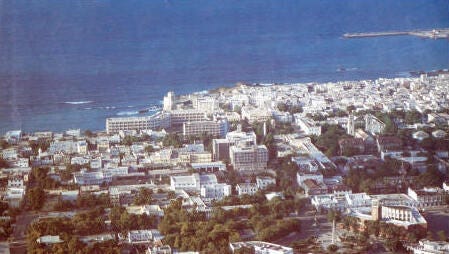
At that time, Mogadishu was known as the White Pearl of the Indian Ocean, it had beautiful palm lined boulevards, whitewashed buildings and a new soccer stadium. In 1960 the two halves were united as the Republic of Somalia. In 1969, a month after the elected president was killed by one of his bodyguards over a clan dispute, General Siad Barre staged a coup. He would rule Somalia with an iron fist until he was driven into exile in 1991. Somalia would degenerate into civil war and clan violence that would last until 2011 or today, depending on how you look at it). In the north, the semi-autonomous Somaliland region had declared independence in April 1991 but was still facing significant military activity by militia groups; the United Somalia Front, the Somalia Democratic Front, the Somali National Movement and the United Somali Party. In the rest of the country, it was sub-clans fighting against one another for control of the capital and other areas.
Before we go any further, we have to look at the clans. Everything that happens in Somalia is driven, not by religion, political party, or any other factor, but nearly 100% of the time, by clan affiliation, and even more often, by sub-clan or sub-sub-clan ties.
Everything you didn’t want to know about Somali clans
The most important aspect of Somali society, and perhaps the most difficult for Western observers to understand or appreciate, are the concepts of lineage and clan affiliation. The clan groupings plays a central part in Somali culture and politics. Clans are patrilineal and are divided into sub-clans and sub-sub-clans, resulting in extended families. It is no exaggeration that Somali children are taught their clan lineages back to the founders and their sub-clan and sub-sub-clan lineages back six generations, so when they meet another person, each can recite his ancestry and thus understand his obligations and responsibilities to the other. All Somalis trace their ancestry back to one man, Abu Taalib, an uncle of the Prophet Mohamed. His son, Aqiil, in turn had two sons, Sab and Samaal. It is from these two, the six clan-families descend and through which all ethnic Somalis trace their ancestry. The Sab branch is represented by the Rahanweyne clan, while the Darood, Dir, Issaq and Hawiye are descended from Samaal branch. Over generations, each of these clans were further subdivided into sub-clans and sub-sub-clans. If you ask a Somali who he is, he will tell you what sub-clan and clan he belongs to, not that he is a Somali or even where he is from. Clan structure and interactions are so important that I received a extensive briefing on the subject before I deployed there.
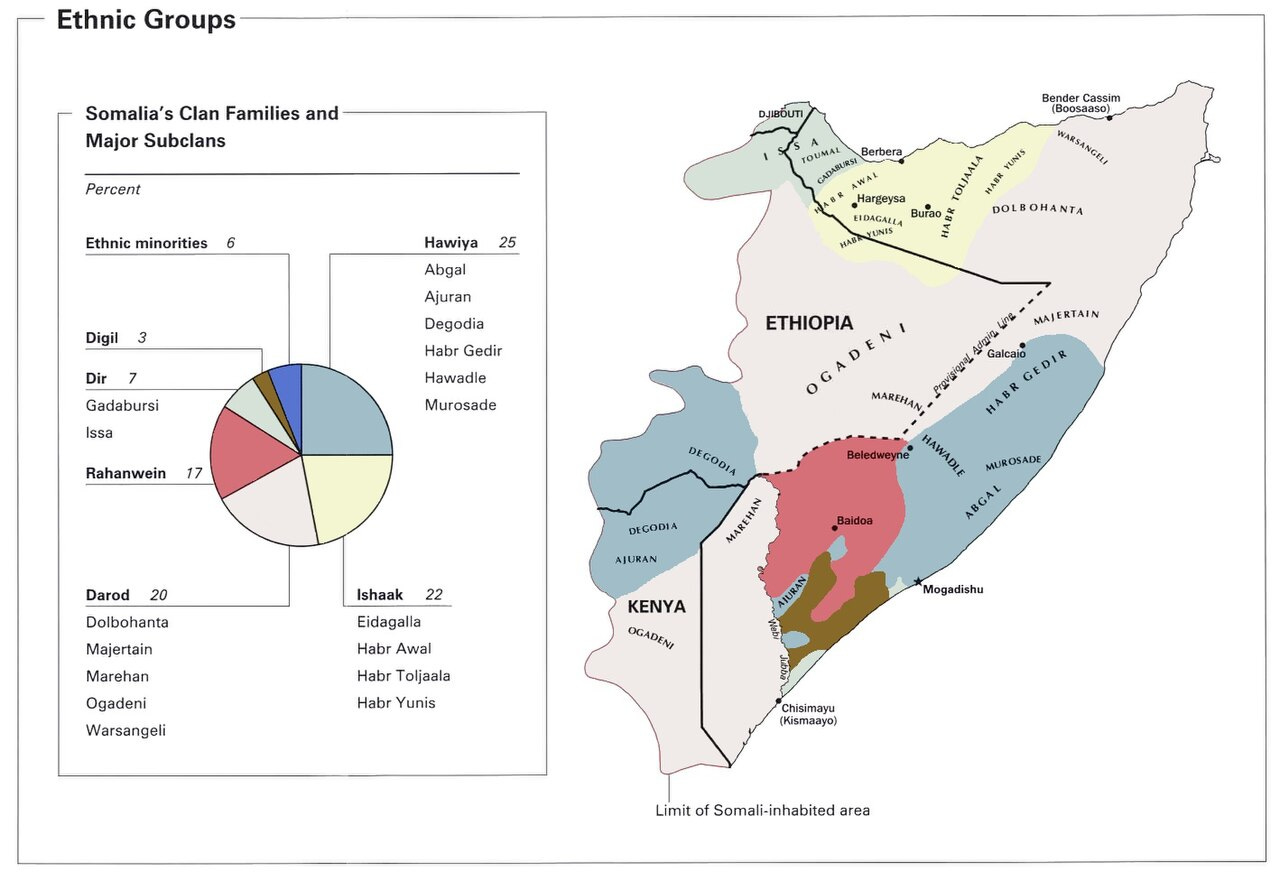
Major Somali clans:
Dir- 7% of Somalis are members of this clan. Gadabursi, Biymaa, Mahe, Madaluug, Madoobe, and Madahweyne are the sub-clans in the Dir family. There are at least twelve sub-sub-clans as well.
Rahanweyn- 17% of the population are members of this clan. Mirifle, Sagaal, Sideed, and Digil being the sub-clans, and there are a further 30 sub-sub-clans.
Darood- 20% of Somalis belong to this clan. The sub-clans inside the Darood are: Majeerteen, Ogaden, Marehan, and Harti. There are 41 sub-sub-clans as well.
Isaaq- 22% of the population belongs to this clan. Habr Awal, Issa, Arap and Gadaburs are sub-clans in the Isaaq family. There are thirteen sub-sub-clans attached to the Isaaq clan.
Hawiye- At 25% it is the largest clan. The sub-clans are the Karanle, Gugundhabe, Jidle alias, Jijeele, Gorgaarte, Jambeelle, Xaskul, Habar Gedir and the Abgal, and there are also 125 sub-sub-clans connected to the Hawiye clan.
Modern History (1991 to 2025)
In 1992, during a significant drought, members of the Hawiye clan (the largest clan, see above), began using a famine as a weapon of war against the smaller Dir clan. They were preventing food and aid shipments from leaving the ports of Mogadishu and Kismayo or hijacking them enroute to be used for their own people.
The UN responded to public outcry after pictures and news reports of starving children in Somalia splashed across western tv screens. This led to the formation of UN Operations in Somalia I (UNISOM I) and eventually, after the failure of that operation to restore the rule of law and secure food shipments, the US led Unified Task Force (UNITAF, or Operation Restore Hope), UNITAF was able to secure food shipments and made decent inroads in restoring a sense of lawfulness, at least in Mogadishu, and was replaced by UNISOM II. If you would like a more detailed look at the efforts of UNITAF, at least from the perspective of a Marine Corps Radio Operator, click below.

UNISOM II saw a upsurge in violence and attacks against UN and US forces (it started while I was there, but it got much worse after the bulk of US forces left), including the infamous Blackhawk Down incident during the ill-advised Operation Gothic Serpent (US forces attempted to capture General Aidid). On March 3, 1995 UNISOM troops, including American advisors withdrew from the country. The UN pointed to a lack of progress on peace proposals and a failure of the Somalis to cooperation on security issues as reasons they did not complete their mandate. They received significant backlash after the withdrawal prompting them to state they were not abandoning Somalia. However, they provided little military support until the formation of the more African-centric AMISOM operation in 2007.
On August 2, 1996, General Mohamed Farrah Aidid (clan Hawiye, sub-clan Habar Gidir) died from a heart attack while in surgery for wounds he received during fighting against Ali Mahdi Muhammad (clan Hawiye, sub-clan Abgaal) and Osman Ali Atto (clan Hawiye, sub-clan Habar Gidir, sub-sub-clan Ayr)2 in Mogadishu. This cleared the way for the 1998 constitutional conference held in the northeastern town of Garowe. Over a period of three months, the area’s political elite, clan elders, and other civil society representatives, established the Puntland State of Somalia. It would function like an American state, inside the framework of a federal Somali government. Unfortunately, there wasn’t a real federal government to join with, as the central and south of Somalia was still in turmoil.
In 2000, “President of Somalia” (I put it quotes because how can you be president of a country where you are only in charge of a small portion of it?) Ali Mahdi participated in another conference in Djibouti. He lost a re-election bid to former dictator Siad Barre’s Interior Minister Abdiqasim Salad Hassan. In 2000, the idea of a Transitional National Government was broached as a way to attempt to move on from the constant state of violence and lawlessness that had plagued Somalia since 1991. It would be one step in a process.
In 2004, the next step of the process, the Transitional Federal Government (TFG), was established in Nairobi, Kenya. By June, the selection of members of parliament was underway. In August, over two hundred members of parliament took the oath of office, and in October 2004, Abdullahi Yusuf Ahmed was elected president by the parliament. However, in March 2005, the TFG split after a brawl in parliament over deployment of peacekeepers and disputes over an interim capital. The parliamentary speaker led some members to Mogadishu while the president and others remained in Nairobi. In June 2005, under pressure from Kenya, the remainder of the TFG left Nairobi for Jowhar, 50 miles north of Mogadishu.

Islamic Courts Union
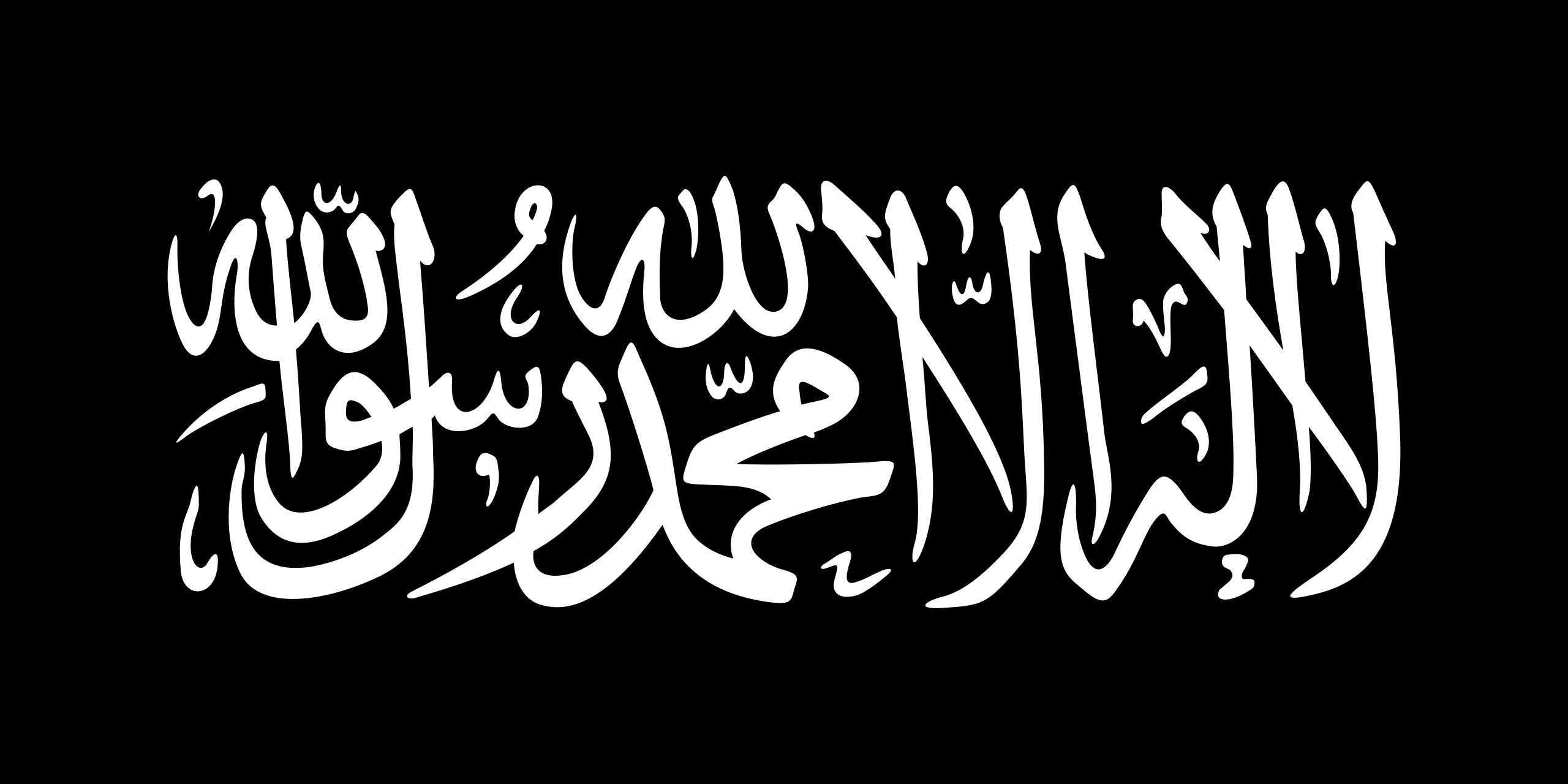
In the weeks following the toppling of the Barre regime, militias that had routed the government began hunting down civilians based on their clan affiliation. Around this time, several well-known Somali Islamic scholars established Sharia courts to rescue civilians from these attacks and to address the rising levels of lawlessness. The first Shari'a courts were started on a small local neighborhood level by Somali religious leaders as a way to address issues in their communities. Most problems they dealt with were related to petty crimes and family disputes. In the chaotic political context of war torn Mogadishu the religious leaders were considered by most Somalis as some of the only people who could be trusted to impartially resolve disputes. Importantly, the courts also did not take positions on national-political or clan affairs, lending significant credence to their purported impartiality. In the early 2000s, as the courts began to realize that they could join together across the country and actually form, what could become a functioning government, tensions escalated with the warlords, who were becoming increasingly marginalized. The courts began calling themselves the Islamic Courts Union (ICU).
The ascendance of an Islamist political force in Somalia during this period was perceived as a threat to US strategic interests in the Horn of Africa, and a potential terror risk. The US did not want Somalia to become another terrorist heaven like Afghanistan was. Beginning in 2003, the CIA initiated covert operations against the Islamic Courts Union, aiming to depose them from power. The CIA and the warlords formed a group called the Alliance for the Restoration of Peace and Counter-Terrorism (ARPCT) and in the first half of 2006, the ARPCT confronted the ICU in Mogadishu. However, the ICU won a decisive victory in June of that year, then rapidly expanded and consolidated its power throughout southern Somalia. By August 2006, the TFG was confined to Baidoa under Ethiopian protection.
In December 2006, Ethiopian troops entered Somalia to assist the TFG against the ICU, initially winning the Battle of Baidoa. With Ethiopian support, TFG forces recaptured the capital from the ICU, which helped the TFG solidify its rule. On January 8, 2007, TFG president Abdullahi Yusuf Ahmed entered Mogadishu for the first time since being elected to office. Unfortunately, the TFG was seen, by most of the population of Mogadishu, as a puppet of Ethiopia, and the militias that became TFG security forces became the principal source of violence against the local population, engaging in kidnapping, assaults, and worse. Within weeks, an armed insurgency arose in the capital against the TFG and its Ethiopian allies.

al-Shabaab
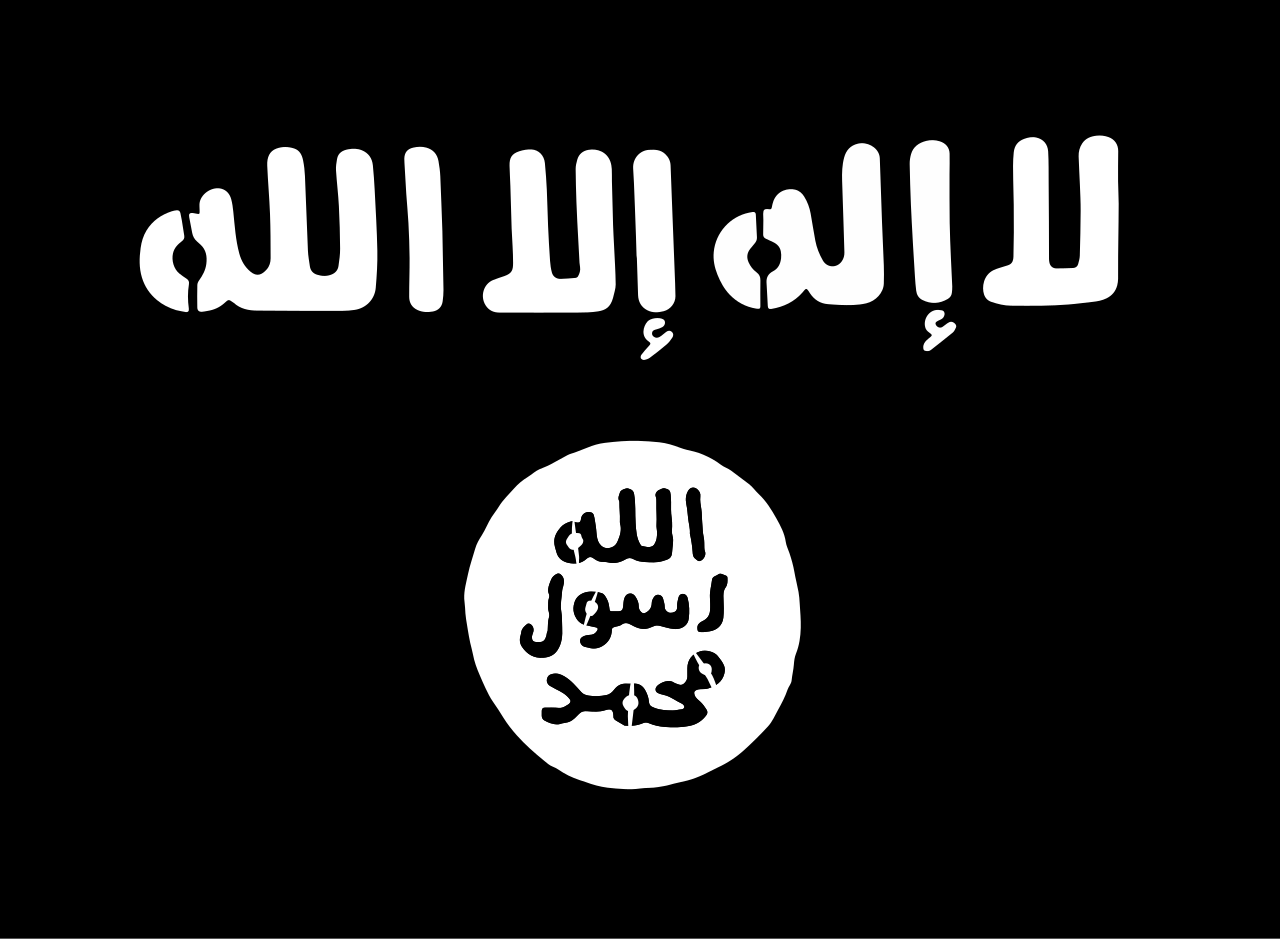
Following their defeat, the ICU splintered into several different factions, the most radical elements became an al-Qaeda affiliate group called al-Shabaab.3 Throughout 2007 and 2008, al-Shabaab scored military victories, seizing control of key towns and ports in both central and southern Somalia. Ethiopia was surprised by the insurgency’s persistence and strength and frustrated at the TFG’s chronic internal problems. By January 2009, al-Shabaab had forced the Ethiopian troops to retreat, leaving behind an understaffed African Union peacekeeping force.
Early in 2009 al-Shabaab controlled 80% of the country, but between February 2009, and September 2014, with the help of AMISOM4, and US airstrikes, government forces fought against al-Shabaab and another Islamist group Hizbul Islam5 active in Somalia. In 2010 a new government was elected and was able to pay government soldiers, which greatly helped the efforts against al-Shabaab. In August 2011, al-Shabaab was forced to withdraw from most of Mogadishu. al-Shabaab did still retain a foothold in the northern outskirts of the capital, but by January 2012, the combined efforts of Somali government and AMISOM forces had expelled them from the city completely. After the capital was cleared, Somali Armed Forces and the Kenya Defense Forces launched Operation Linda Nchi6 a joint operation against al-Shabaab which, at its conclusion left the southern port city of Kismayo as the remaining stronghold of al-Shabaab. In September 2012, a Kenyan-led AMISOM force launched an offensive against Kismayo. After a three-day battle government forces were able to gain control of the city. While urban areas had been seized, al-Shabaab still controlled many rural areas, where a number of their operatives disappeared into local communities in order to try to wage a guerrilla campaign. September 2012 also saw the establishment of the Federal Government of Somalia.
In January 2014, following UN Security Council Resolution 2124, an additional 4,000 UN troops were brought in to augment AMISOM’s 22,126 strong force. In early March 2014, AMISOM, supported by Somali militias, launched another operation to remove al-Shabaab from its remaining areas of control in southern Somalia. By the end of March they had liberated 10 towns , and UN Special Representative for Somalia Nicholas Kay described the operation as the most significant and geographically extensive offensive since AMISOM troops began operations in 2007. Following its territorial losses al-Shabaab reverted to guerrilla attacks on AMISOM and government forces. The group also undertook high-profile attacks outside Somalia such as the September 21-24, 2013 Westgate shopping mall attack in Nairobi that left 67 dead and 163 wounded. In August 2014, the Somali Armed Forces launched Operation Indian Ocean, aiming to reduce insurgent-held areas along the coastline. They were assisted in this effort, when on September 1, 2014, a US drone strike killed al-Shabaab leader Muktar Abu Zubeyr. After the killing of Zubeyr, the Somali government offered a 45-day amnesty and 700 Al-Shabaab militants took advantage of the offer.
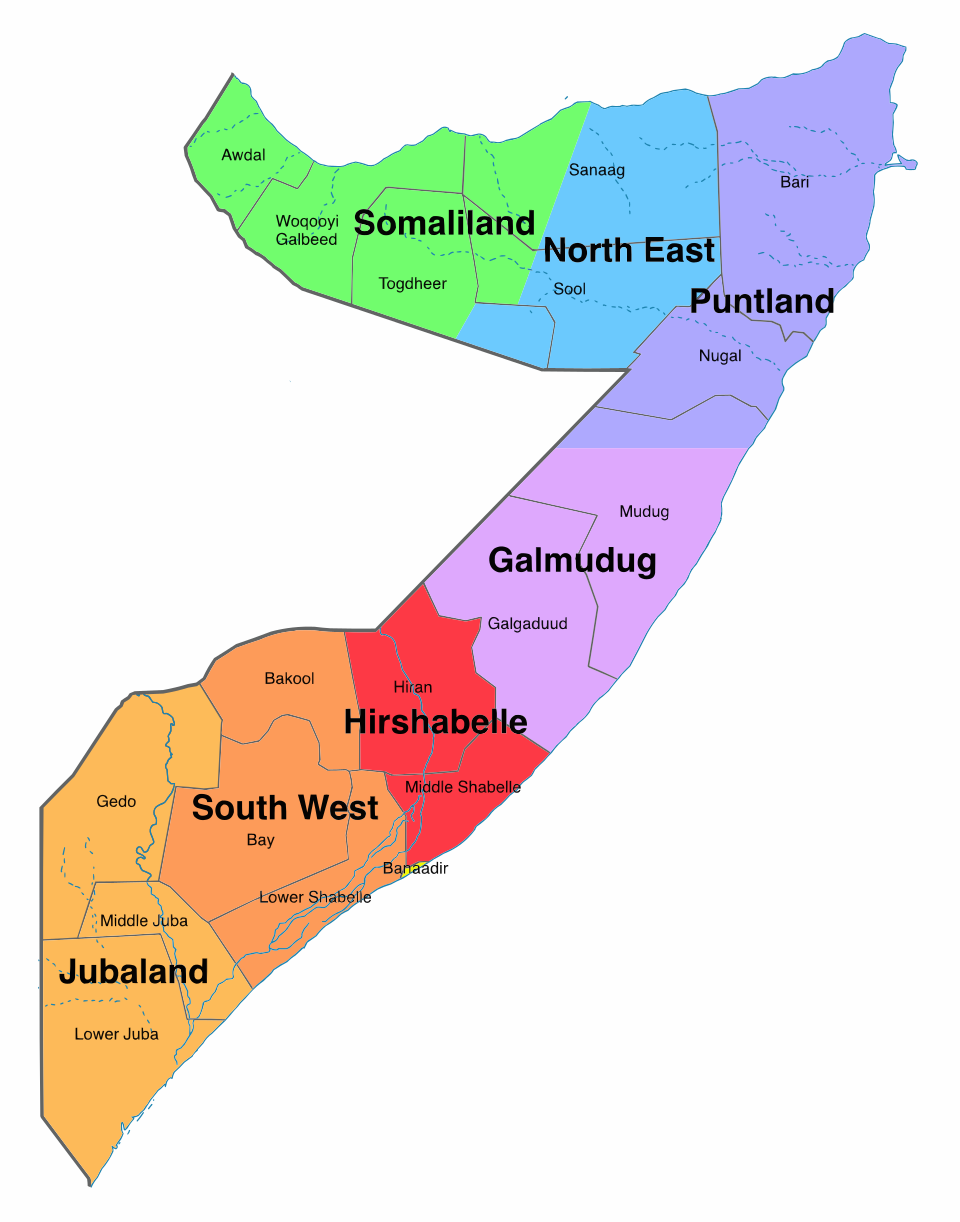
On April 15, 2015 al-Shabaab struck Kenya again, attacking and seizing the Garissa University College. The terrorists killed 148 Christian students, and wounded 48. Nonetheless, by 2016, experts believed that Al-Shabaab was significantly weakened both by the ongoing military campaign, the death of their leader, and further defections. However, the reports of the demise of al-Shabaab were proven premature, when on October 14, 2017, 587 people were killed and 316 were wounded in a double suicide truck bombing in Mogadishu. al-Shabaab did not claim responsibility for the attack but intelligence reports pointed to them as responsible. December 28, 2019 saw another al-Shabaab suicide truck bomb attack, this time killing 97 people and wounding 146. On January 5, 2020, al-Shabaab targeted American military personnel in an attack on Camp Simba in Kenya. The raid, by 40 al-Shabaab terrorists, killed one US military member and two civilian contractors, as well as destroying five aircraft, and damaging a third. Two US military vehicles and three fuel tankers were also destroyed. Five terrorists were killed and five captured. By 2020, the group’s strategy of semi-territorialism allowed it operate freely in much of rural Somalia, with its primary base in the Jubba River valley. al-Shabaab had also began an operation in Puntland, prompting a military offensive by Puntland forces in 2021. The resurgence of the group was partly enabled by a reduction in the number of American air strikes, and also possibly motivated by competition with Islamic State in Somalia7, which has been conducting its own expansionary campaign.
In March 2022, the 14-year long AMISOM mission came to an end. It was replaced by the African Union Transition Mission in Somalia (AUTMS). On July 20, 2022, al-Shabaab launch an invasion of Somali Regional State8 taking advantage of the ongoing Tigray War9 with the goal of establishing a presence in southern Ethiopia. After two weeks of intense fighting the Ethiopian National Defense Force, along with Somali Regional Security Forces regained control of the area, except for 500 al-Shabaab militants that have been hiding in the Bale Mountains.
During the evening of August 19, 2022, al-Shabaab militants attacked the Hyatt Hotel in Mogadishu, with two car bombs and gunfire. 22 people were killed, and 30 others were wounded. After this attack, Somali President Hassan Sheikh Mohamud declared “total war” against al-Shabaab during a televised address. He also announced that the Somali military had regained territory from al-Shabaab in the central Galmudug state and the Southwest state. The Somali Armed Forces and the ATMIS, with US support, focused on disrupting al-Shabaab activity in Somalia’s central Hiran region of the Hirshabelle State. Other al-Shabaab-controlled areas in southern Somalia were also targeted, and on September 20, The Somali Ministry of Information released a statement stating that President Sheikh would not offer any other option than surrender for al-Shabaab members. al-Shabaab was unimpressed, and on October 29, 2022 detonated two car bombs outside the Ministry of Education. The attack killed 121 people and wounded 333 more. Then on May 26, 2023, al-Shabaab attacked the ATMIS forward operating base near Buulo-Mareer, 75 miles southwest of Mogadishu., killing 54 Ugandan soldiers.
In December 2024, the UN Security Council approved a resolution to establish the African Union Support and Stabilization Mission in Somalia (AUSSOM),a streamlined successor to ATMIS, which ended in 2024. The AUSSOM deployed 12,626 personnel to support Somalia’s fight against al-Shabaab. Also in December, al-Shabaab confirmed the death of Mohamed Mire Jama’a, senior leader of the group, in an American drone strike. Despite all the hand-ringing at the UN, al-Shabaab remained a threat to Somalia and the region as a whole. This was made apparent in early 2025, when al-Shabaab launched a large-scale military offensive. It’s most ambitious operation in years, the ultimate objective was to seize Mogadishu and overthrow the federal government. Probing attacks that began in January escalated into major offensives on multiple fronts, stretched government troops to their breaking point. By April the military situation had deteriorated to the extent that rumors were circulating on social media of an impending assault on the capital. No attack on the capital occurred, but they did try to kill President Mohamud with multiple bombs along his motorcade route. US airstrikes and local counterattacks helped slow their advance, but al-Shabaab remains, and will continue to be, a very serious threat to stability in Somalia. al-Shabaab has begun to implement a “hearts and minds” strategy in areas they have occupied. They are attempting to shed their well-deserved reputation as a proponent of a reactionary version of Islam and the multiple suicide bombings that have killed hundreds of civilians.
Corruption in Somalia
The 2024 Corruption Perceptions Index by Transparency International ranked Somalia as a 9 on a scale from 0-100, with 100 being the least corrupt. Only South Sudan had a lower score (8).10 Somalia’s economy is mostly an informal operation, led by the livestock trade, telecommunications and remittances from those abroad, (that’s where all the federal and state dollars given to those “daycares” ends up). Somalia's telecom sector is deeply affected by endemic corruption, with officials allegedly demanding bribes, companies paying "taxes" to militant groups like al-Shabaab for operational access, and a general lack of transparency leading to misuse of funds and unfair demands, even as the sector thrives due to remittances and diaspora needs, making it a vital but compromised part of the economy. Corruption manifests as routine undeclared payments to officials, unlawful taxes, embezzlement of state revenue, and weak oversight, with companies often forced to operate outside legal frameworks, facing financial harm and reputational damage.
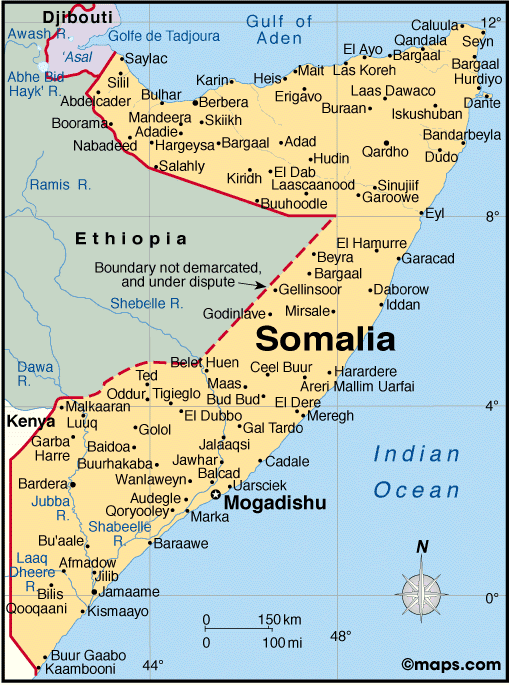
People like Abdirizak Osman, a local entrepreneur, in the central Somali city of Gaalkacy, used his “telecom profits” to provide streetlights to the town, in exchange, of course, for tax breaks and fewer problems with red tape. He is not the only one to use their profits from the corrupt telecom sector to finance electrical projects for the country. One could look at these efforts as the price of doing business in a country where nothing gets done without palms being greased but the government is hard-pressed to contain the level of corruption.
Charcoal trafficking, which is a significant source of revenue for criminal networks, also further fuels corruption. It began with the collapse of the banana industry in the 1990s. Charcoal is produced by cutting down and burning acacia trees, then transporting the charcoal to ports in southern Somalia for export to the Gulf Cooperation Council states. The charcoal trade in southern Somalia relies on partnerships between local businesses, mainly in Kismayo, and corrupt regional authorities. The business has been lucrative. In 2012, a bag of charcoal that was priced at around $3.50 (US dollars) in Somalia was sold for approximately $10.00 in the Gulf States. The charcoal trading pattern has exacerbated Somalia’s imbalances and has resulted in Somalia’s political elite becoming more reliant on personal patronage, and embroiled them in competing rivalries, which destabilizes both Somalia and the wider region. The Jubaland State, for example, has profited significantly from the illicit charcoal exports by collecting tolls and fees at checkpoints and ports. In 2016, fees of $3.00 per bag were levied, resulting in a monthly income of between $1.1 million and $1.5 million for the Jubaland administration. In early 2010s an established trade cycle involved the importation of sugar to Somalia and the export of charcoal to the GCC countries on the same vessels. Charcoal traders would send their ships to Barawe or Kismayo to load charcoal for the return trip after offloading sugar at the port of Mogadishu. In 2012, 26% of the ships off-loading at the port of Mogadishu were heading to Kismayo next and most of them originated from Dubai, UAE.
The second, and much more well known method of funding corruption, is piracy. Beginning in the 1990s, the collapse of the central government and the absence of a functioning coast guard led to an increase in piracy off the coast of Somalia. Pirates targeted commercial vessels, holding them for ransom and generating significant revenue. In 2008 alone, Somali pirates were responsible for approximately 100 attacks, with ransoms ranging from $500,000 to $3.5 million per vessel, totalling $120 million. The economic impact of piracy extended beyond the immediate ransoms. Global shipping companies faced increased insurance premiums and rerouted their vessels to avoid Somali waters, leading to higher operational costs. The World Bank estimates that Somali piracy added approximately $18 billion annually to global shipping costs due to increased insurance premiums and rerouting.
It is not just the private sector that is rife with corruption, the government, such as it is, is also riddled with corruption. Even going as far as misallocating weapons for al-Shabaab. The UN Somalia and Eritrea Monitoring Group reported that systematic abuses by Somali government officials had allowed weapons to be diverted away from Somalia’s security forces into the hands of faction leaders and al-Shabaab militants. The panel had observed various problems with the management of weapons and ammunition stockpiles, including difficulties by monitors in accessing local weapons stockpiles and obtaining information about the arms. The monitors also suggested that one key adviser to the president was involved in planning arms deliveries to al-Shabaab and that shipments of weapons from Djibouti and Uganda could not be accounted for. The Somali government was also required to routinely report on the structural status of the military, as well as provide information on the extant infrastructure and protocols designed to ensure the safe return, storage, and maintenance of the military equipment.
There are multiple reason corruption exists at the level it does in Somalia:
Weak governance and institutions resulting from the protracted governmental vacuum and fragmented state structures, hinder the establishment of effective anti-corruption measures and oversight.
Ongoing conflict, including terrorism, stifles state efforts, creates lawlessness, and allows illicit economies to thrive, with officials often tolerating illegal activities for bribes.
Clan loyalty and politics supersedes national interest, with positions used for personal gain, while clan affiliations are invoked to shield corrupt officials from accountability.
Poverty and a large informal economy push individuals towards bribery for survival, while lucrative sectors like telecom see elites co-opt officials for benefits.
Weak financial management systems, opaque processes, and limited public access to information enable the misappropriation of funds, with little consequence for powerful individuals. Sounds familiar, doesn’t it Governor Walz!
Unmonitored aid flows can be siphoned off, exacerbating existing corruption and undermining development. Governor Walz has checking this one off his corruption bingo card.
I think I have laid the groundwork for the next post when I will look at how this all connects with what is happening in Minnesota (from the fraud angle, not the trying to kill ICE agents angle). I hope you have found this post illuminating and possibly even educational. Feel free to share this with anyone who might be interested. As I said, next time I’ll look at the fraud in Minnesota and how no one should have been surprised that it was happening.
Chris
One US dollar is worth 569 Somali Shillings, so it’s pretty much worthless.
Osman Ali Atto served as the second in command, primary advisor and financier of Aidid during is time as a warlord. He was also a big name in the Khat industry and a representative of the US-based oil company Conoco. I listed the clan affiliations of Aidid, Ali Mahdi, and Atto to illustrate how it is sometimes sub-clan or even sub-sub-clan ties that will affect political issues in the country.
al-Shabaab (The Youth), is a Sunni Islamist paramilitary organization. It refers to itself as the Islamic Emirate of Somalia. The group has regularly invoked takfir (the excommunication of a Muslim by another for apostasy), to rationalize their terrorist attacks on Somali citizens. It is allied to al-Qaeda.
AMISOM was an African Union military mission comprised of troops from Burundi, Djibouti, Sierra Leone, Uganda, after 2012 Kenya, and after 2014 Ethiopia.
Hizbul Islam (Islamic Party of Islam) was another splinter group from the Islamic Courts Union. By 2010 the group split between members who were actively fighting against or actively supporting
Linda Nchi means “Protect the Country” in Swahili.
Islamic State in Somalia (ISS) is an affiliate of the Islamic State in Iraq and Syria (ISIS), that primarily operates in the mountainous regions of Puntland in northern Somalia. They have claimed responsibility for multiple attacks across the country. The group first appeared in the latter half of 2015 when pro-Islamic State fighters within Al-Shabaab defected and pledged allegiance to IS caliph Abu Bakr al-Baghdadi. The group has an estimated 500–700 fighters. ISS is mainly based on a single clan, namely the Ali Saleebaan sub-sub-clan of the Majeerteen sub-clan of the Darood clan.
The Somali Region is a regional state in eastern Ethiopia. It is the second largest region of Ethiopia in terms of area. The state borders the Ethiopian regions of Afar and Oromia to the west, Djibouti to the north, Somaliland to the northwest, Somalia to the east and south, and Kenya to the southwest. Jijiga is the capital.
The Tigray War was a civil war primarily fought in the Tigray region of Ethiopia, between forces of the Ethiopian government and Eritrea on one side, and the Tigray People’s Liberation Front (TPLF, a left-wing ethnic nationalist paramilitary group) on the other.
The highest is Denmark with a 90. The US was ranked 65, the UK was a 71.